August 2, 2026 • 5 min read

How to Spend Bitcoin in 2026: A Practical Guide
Quick Answer
You can spend Bitcoin today through crypto debit cards, direct merchant checkout, Lightning Network payments, and gift card bridges like Bitrefill, plus using it to fund online activity such as crypto casino play, without ever converting to cash first.
You must be 18+ to access this content. Please gamble responsibly.
Key Facts
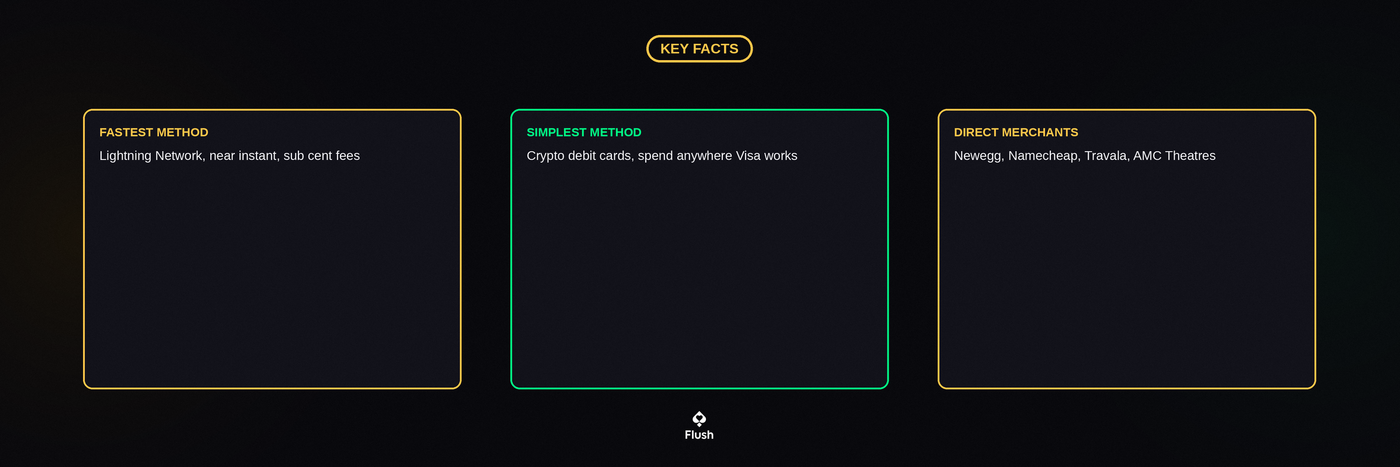
| Fastest spending method | Lightning Network, near instant settlement, sub cent fees |
| Simplest everyday method | Crypto debit cards (Coinbase, Crypto.com), spend anywhere Visa or Mastercard works |
| Direct merchant examples | Newegg, Namecheap, Travala, AMC Theatres, Square powered merchants |
| Common payment processors | BitPay, Coinbase Commerce |
| Gift card bridge | Bitrefill, converts BTC into gift cards for Amazon, Netflix, Uber and more |
| Lightning Network scale (2026) | Over 10 million monthly transactions across thousands of active nodes |
| Tax treatment (US) | Spending BTC is generally a taxable disposal of property |
You can spend Bitcoin today in several genuinely practical ways: crypto debit cards that convert BTC to fiat at checkout, direct merchant acceptance at retailers who take BTC natively, Lightning Network payments for near instant small purchases, gift card bridges for stores that don't take crypto directly, and funding online activity like crypto casino play. None of these require selling Bitcoin on an exchange and moving cash to a bank account first.
Crypto Debit Cards
The simplest way to spend Bitcoin anywhere that takes a normal card is a crypto debit card. Providers including Coinbase and Crypto.com issue cards linked to your crypto balance, and at the point of sale the provider instantly sells the BTC needed to cover the purchase and settles with the merchant in regular currency. From the merchant's side, it looks exactly like any other Visa or Mastercard transaction. The tradeoff is that you're triggering a taxable sale of Bitcoin every time you tap the card, which is worth tracking for tax purposes. Debit cards aren't the only bridge between Bitcoin and spending it though, some platforms let you fund crypto gambling directly instead of converting to fiat first. Card fees vary by provider, typically a flat percentage per transaction plus any card network fees, so it's worth comparing a provider's fee schedule before relying on one for regular spending.
Paying Merchants Directly
A smaller but real list of merchants accept Bitcoin directly rather than through a card. Retailers such as Newegg, Namecheap, Travala, AMC Theatres, and a range of Square powered small businesses accept BTC at checkout, usually through a payment processor like BitPay or Coinbase Commerce that converts the Bitcoin to fiat for the merchant instantly, so the business itself never holds price risk. This list changes as merchants add or drop crypto support, so check a given retailer's current payment options before assuming BTC is accepted. Bitcoin's growing role in everyday commerce is part of the same trend that has made crypto casino platforms more mainstream for entertainment spending. Checkout flows built specifically for crypto typically lock in the BTC amount for a short window, often ten to fifteen minutes, to protect both the buyer and merchant from a price move mid transaction.
The Lightning Network for Small, Fast Payments
For everyday sized purchases, the Lightning Network is the practical option. It is a payment layer built on top of Bitcoin that settles transactions almost instantly for a fraction of a cent in fees, instead of waiting for a Bitcoin block confirmation. As of 2026, Lightning handles well over ten million transactions a month across thousands of active nodes, and major exchanges including Kraken and Coinbase support Lightning deposits and withdrawals directly, which makes it realistic to pay for something like a coffee or a subscription in Bitcoin without friction. That same instant settlement speed is why Lightning has become a popular way to fund crypto gambling sessions without waiting on confirmations.
Lightning works by opening a payment channel, a small commitment of Bitcoin locked between two parties on the main blockchain, and then letting them send funds back and forth off chain as many times as they want at effectively no cost. Only the opening and closing of the channel touch the base Bitcoin blockchain directly, while everything in between is just an update to a balance both sides have already agreed to. In practice, most users never open a channel manually. Wallets like Phoenix, Muun, and Wallet of Satoshi, along with exchange integrations, route payments through a wider network of already open channels, so a single Lightning payment often hops through two or three intermediate nodes before reaching its destination in under a second.
Gift Card Bridges
For stores and services that don't accept crypto at all, Bitcoin gift card marketplaces close the gap. Bitrefill is the best known example, letting you spend BTC, including over the Lightning Network, to instantly buy gift cards for retailers like Amazon, Netflix, and Uber. This effectively turns Bitcoin into spending power at almost any major retailer, just with one extra conversion step. Gift cards are typically delivered as a code within minutes of payment, and most marketplaces let you choose the exact denomination you want rather than being locked into fixed amounts, which makes it easy to spend precisely what you intend without leftover balance sitting on a card. This route is particularly useful for one off purchases at a retailer that will never realistically add native crypto support, where waiting for merchant adoption isn't a practical option.
A Few Things Worth Knowing Before You Spend
Bitcoin's price moves enough in a single day that spending it can feel different from spending cash. If BTC rallies right after you spend it, you've effectively paid more in dollar terms than the sticker price; if it drops, you paid less. In most countries, including the US, spending Bitcoin is treated as a taxable disposal of property, meaning you may owe capital gains tax on the difference between what you originally paid for the BTC and its value at the time you spent it. None of this makes spending Bitcoin impractical, it's just worth tracking, especially if you're using it regularly through a debit card or for online purchases. None of it changes how straightforward it is to spend BTC directly at a platform like Flush once you've budgeted for it.
Record keeping gets more important starting with the 2026 tax year. In the US, centralized exchanges have begun issuing Form 1099-DA to report digital asset activity to the IRS, with 2025 transactions reported on a proceeds only basis and cost basis reporting becoming mandatory for assets purchased on or after January 1, 2026. That shifts more of the reporting burden onto exchanges going forward, but it does not remove the need to track your own records, especially for BTC bought before 2026 or moved between wallets, where an exchange may not have the full cost basis history. Keeping a simple log of the date, amount, and USD value of each purchase and each spend remains the most reliable way to calculate gains or losses accurately, regardless of what a broker reports.
Funding Online Play With Bitcoin
One legitimate, straightforward use of Bitcoin is funding online activity that accepts it directly, including crypto casino play. Sites like Flush let you deposit Bitcoin and withdraw winnings back to your wallet without routing through a bank account or card processor at any point, which is closer to how Bitcoin was originally designed to move than a debit card swap ever is. It's one of a genuinely small number of use cases where you spend BTC as BTC, rather than converting it to fiat behind the scenes.
Responsible Gambling
If tracking crypto prices or news makes you want to increase your exposure to the market, whether through investing or gambling, keep it within a budget you set in advance. Flush's responsible gambling tools include deposit limits, session timers, and self-exclusion, all adjustable directly from your account. Free, confidential support is available around the clock from GamCare (0808 8020 133) and BeGambleAware in the UK, and the National Council on Problem Gambling (1-800-GAMBLER) in the US, or via Gambling Therapy globally.
How We Researched This
Methodology
This guide was researched via live web search on August 2, 2026, checking current merchant acceptance, crypto debit card providers, and Lightning Network adoption figures against sources including Ledger's academy content, Bitget's 2026 guides, Rango Exchange, and Bitrefill's own service description. Merchant acceptance changes frequently as businesses add or drop crypto payment options, so specific retailers named here should be treated as examples of the category rather than a guaranteed current list, and readers should confirm a merchant's crypto payment options directly before assuming Bitcoin is accepted. Lightning Network transaction volume figures cited are approximate 2026 industry estimates and will shift as adoption grows.
FAQ
Frequently Asked Questions
Can you spend Bitcoin directly without converting it to cash first?
What is the easiest way to spend Bitcoin day to day?
Do I owe taxes when I spend Bitcoin?
What is the Lightning Network used for?
Can I use Bitcoin gift cards to shop where crypto isn't accepted?

Share This Post
Share this post for your chance to win!
Related Posts
Level up your knowledge
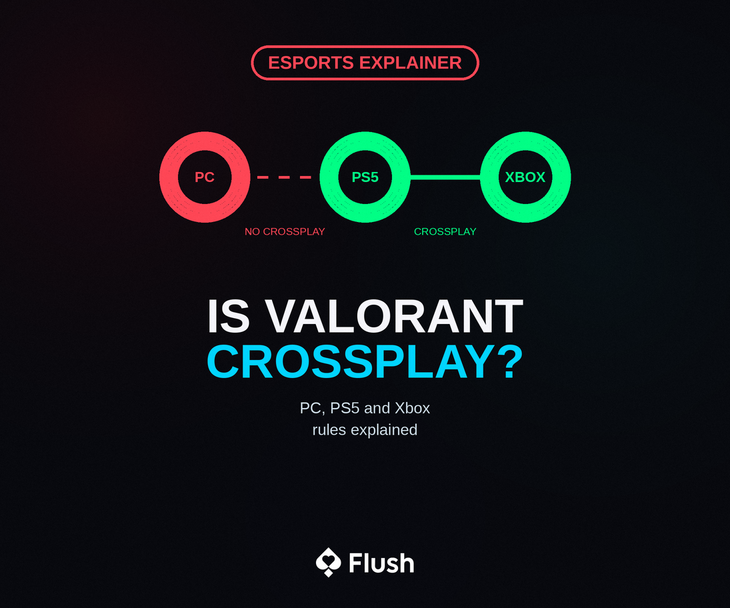
Is Valorant Crossplay? PC, PS5, and Xbox Explained 2026
Whether Valorant supports crossplay depends on which platforms you are asking about: PC stays fully separate from console, but PlayStation 5 and Xbox Series X|S share the same lobbies.
5 min read
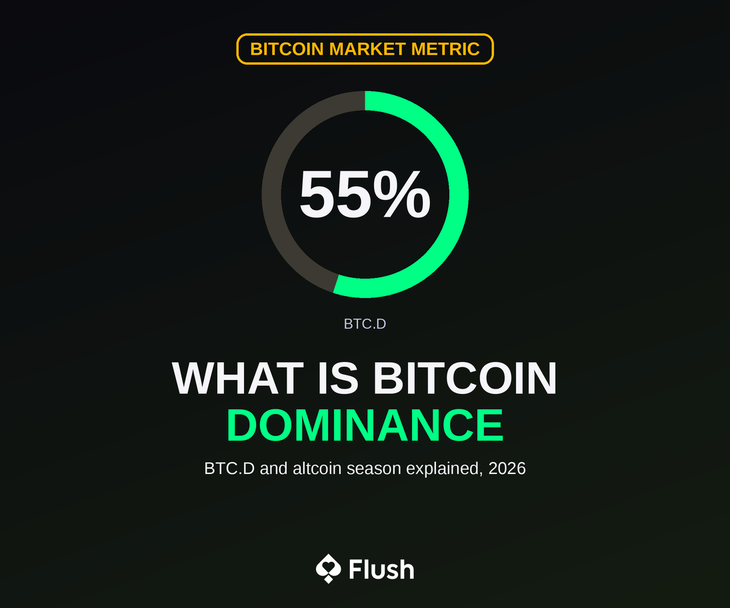
What Is Bitcoin Dominance? BTC.D Explained (2026)
Bitcoin dominance measures BTC's share of the total crypto market cap, and it moves altcoin season, position sizing, and which coin makes sense to hold or wager with right now.
5 min read