September 10, 2026 • 5 min read

Best Crypto Sports Betting: A Complete 2026 Guide
Quick Answer
Crypto sports betting means funding a sportsbook with cryptocurrency instead of a card. Deposits and withdrawals settle over a blockchain rather than a bank, often faster and cheaper. Flush's sportsbook covers major sports and esports like CS2 and Dota2.
You must be 18+ to access this content. Please gamble responsibly.
Key Facts
| Flush sportsbook | Live at flush.com/sports/ |
| Esports markets | Includes CS2 and Dota2 |
| Supported cryptocurrencies | 10, including BTC, ETH, USDT, and SOL |
| Typical fiat withdrawal time | 1 to 5 business days |
| Bitcoin block time | About 10 minutes |
| Ethereum block time | About 12 seconds |
| Flush license | Anjouan License No. ALSI-202509008-FI1 |
| Identity verification at Flush | Not required to deposit, bet, or withdraw |
Betting on sports with crypto is not a different kind of bet, it is a different way of moving money in and out of the same sportsbook experience: picking a game, choosing a market, and staking an amount you are prepared to lose. What changes is how you fund your account, how fast a withdrawal actually lands, and in many cases what identity checks you go through to get started. This guide explains how crypto sports betting works in general, what advantages it offers over funding a sportsbook with a card, and how Flush's own sportsbook, live at flush.com/sports/, applies those mechanics across major sports and esports.
What Crypto Sports Betting Actually Means
Crypto sports betting means using a cryptocurrency such as BTC, ETH, or a stablecoin to fund a sportsbook account, place wagers, and receive payouts, instead of using a debit card, bank transfer, or e-wallet. The betting itself works exactly like a traditional sportsbook: you pick a match or event, choose a market such as a moneyline, spread, or total, see the odds, and stake an amount. The only structural difference is the payment rail underneath the bet. A deposit is a blockchain transaction sent to an address the sportsbook generates, and a withdrawal is a transaction sent back to a wallet you control, rather than a transfer processed through a card network or a bank's ACH system.
Because the ledger recording each transaction is the blockchain itself rather than a bank's internal system, deposits and withdrawals do not depend on a third party approving, batching, or holding the transfer. That single structural difference is the source of almost every practical advantage crypto sports betting offers over a fiat sportsbook.
Why Crypto Sportsbooks Have an Edge Over Fiat Ones
Deposits and withdrawals move faster. A card deposit at a fiat sportsbook is usually instant, but a withdrawal back to a bank account commonly takes one to five business days, since it passes through the sportsbook's payment processor and then the receiving bank's own clearing process. A crypto withdrawal is a direct on chain transaction, and once a sportsbook processes its side, the money is not sitting in an intermediary's queue waiting for a batch settlement window. Confirmation time then depends on the network used. Bitcoin averages a 10 minute block time and many platforms wait for multiple confirmations, so a BTC withdrawal can take 20 to 60 minutes to fully clear, while faster networks like Solana or TRON confirm in seconds and Ethereum settles in roughly 12 second blocks.
Fees are usually lower and more transparent. Card processors and banks charge fees throughout the payment chain, some of which get passed to the bettor directly and some of which are absorbed into worse odds or withdrawal minimums. A blockchain transaction fee is set by the network itself, paid once, and visible before you send it. That does not mean crypto betting is free, since network fees still apply and vary with congestion, but the fee structure is transparent in a way a bank's internal processing costs generally are not.
Pseudonymity and account access are simpler. A crypto sportsbook does not need your card number, billing address, or bank details to accept a deposit, since a wallet address is all a blockchain transaction requires. Many crypto sportsbooks, Flush included, do not require identity verification documents to deposit, bet, or withdraw. This is not the same thing as full anonymity, since blockchain transactions are recorded on a public ledger, but it does remove the friction of submitting ID scans and waiting for manual verification that many fiat sportsbooks require before a first withdrawal.
Geography and banking restrictions matter less. A bettor whose bank flags gambling transactions, or who lives somewhere card processors are unreliable for betting deposits, can fund an account directly with crypto they already hold, without a bank sitting in the approval path at all.
How Odds and Staking Actually Work
The mechanics of placing a bet are identical to a fiat sportsbook. Odds are typically shown in American, decimal, or fractional format depending on the platform and your settings, and they represent the same underlying probability and payout regardless of format. A moneyline bet is a wager on which side wins outright, a spread bet adjusts for a projected margin of victory, and a total, or over and under, is a bet on the combined score or a similar statistic crossing a set number. None of that changes because the money behind the bet is BTC, ETH, or USDT instead of dollars.
What does change is the unit your stake and payout are denominated in. Some crypto sportsbooks display everything in the coin you deposited, so a bet might be staked in fractions of a BTC or ETH, while others show a fiat equivalent value that updates with the market price, and let you bet in that denomination while your balance settles in crypto behind the scenes. Either way, the odds and the payout math are the same as any sportsbook, the coin is simply the unit the numbers are expressed in. Because crypto prices move, a stake denominated directly in a floating coin like BTC or ETH carries the same market risk as holding that coin normally would, which is one reason many bettors who want a stable stake size prefer to fund a crypto sportsbook with a dollar pegged stablecoin such as USDT or USDC instead.
How Flush's Sportsbook Works
Flush runs a live sportsbook at flush.com/sports/, funded through the same crypto cashier used across the rest of the platform. That means a deposit in any of Flush's ten supported cryptocurrencies, BTC, ETH, BNB, LTC, USDT, USDC, TRX, POL, DOGE, and SOL, credits a balance you can use to bet on major sports as well as esports markets, including CS2 and Dota2 for players who follow competitive gaming rather than traditional leagues. Because the sportsbook shares its cashier with the casino side of Flush, a single deposit funds both, and a bettor who wants to place a spread bet on a football game and then play a hand of blackjack afterward does not need to move funds between separate accounts or wallets.
Esports markets work the same way structurally as traditional sports markets: moneyline, spread, and total style bets exist for competitive titles the same way they do for football or basketball, adapted to the specific way a given esport measures a win, such as map wins in CS2 or objectives in Dota2. For a bettor coming from traditional sports betting, the format is recognizable even if the underlying game is not.
Live Betting and In-Play Wagering with Crypto
Live, or in-play, betting lets you wager on a match after it has started, with odds that update continuously as the game develops. This works the same way on a crypto sportsbook as it does on a fiat one: the betting engine tracks the event in real time and adjusts markets accordingly, and your crypto balance is simply the funding source behind whatever stake you place. The one place crypto's speed advantage becomes more noticeable during live betting is when you want to top up mid session. A player watching a match who realizes they want more balance to bet with does not want to wait on a card authorization or a bank transfer clearing, and a network like Solana or TRON that confirms in seconds removes that friction almost entirely, letting a top up land before the next market moves.
Common Mistakes When Betting on Sports with Crypto
Sending funds on the wrong network. Several coins exist on multiple networks, and USDT in particular is issued on multiple chains. Sending from the wrong network to a sportsbook's deposit address for a different one can result in funds that never arrive and cannot be recovered. Always confirm the network selected in the cashier matches the network your wallet or exchange is sending from.
Treating a floating coin balance as a fixed bankroll. If you fund your account with BTC or ETH and the price moves significantly during your betting session, your effective bankroll in fiat terms has moved with it, independent of anything happening in the markets you bet on. Bettors who want a bankroll that holds steady in dollar terms generally use a stablecoin instead.
Ignoring minimum deposit and withdrawal thresholds. Networks and sportsbooks both sometimes set minimums, and sending an amount below a stated threshold can result in a deposit that is not credited. Check the cashier's stated minimum before sending, particularly on a network you have not used with that sportsbook before.
Assuming no verification means no records. A sportsbook not requiring identity documents does not mean transactions are untraceable, since blockchain activity is recorded on a public ledger. Bettors are still responsible for understanding and meeting any tax reporting obligations that apply in their own jurisdiction, regardless of the payment method used.
Funding and Cashing Out a Crypto Sports Bet, Step by Step
Step 1: Choose a currency. Decide whether you want to bet with a floating coin like BTC or ETH, or a dollar pegged stablecoin like USDT or USDC if you want your stake size to hold steady in fiat terms regardless of market movement.
Step 2: Deposit into the sportsbook's cashier. Open the cashier, select your currency, and send funds to the generated deposit address. Confirmation time depends entirely on the network: a stablecoin sent over a fast network like Solana or TRON can land in seconds, while BTC typically takes longer given its 10 minute average block time.
Step 3: Place your bet. Browse markets the same way you would on any sportsbook, select your odds, and stake an amount from your balance.
Step 4: Withdraw your winnings. Request a withdrawal to a wallet address you control. The sportsbook processes its side of the transaction, and the network then confirms it according to its own block time, without a bank sitting in the middle of the transfer.
What Actually Makes a Crypto Sportsbook Worth Using
A sportsbook accepting crypto is not, by itself, a reason to trust it with your money. A few concrete things are worth checking before depositing anywhere. First, confirm the operator's license and whether it is active in the relevant public registry, since licensing is what gives you recourse if something goes wrong. Flush is licensed by Fordegens Limitada under Anjouan License No. ALSI-202509008-FI1. Second, check whether withdrawal speed is actually demonstrated rather than just advertised, since a fast network does not guarantee a fast payout if the sportsbook's own processing queue is slow. Third, look at the range of markets on offer, including whether esports are covered if that matters to you, rather than assuming every crypto sportsbook covers the same sports. Fourth, confirm what identity verification is required and at what threshold, since policies vary even among sportsbooks that advertise a no verification model. Flush does not require identity documents to deposit, bet, or withdraw. Fifth, check independent safety indicators rather than relying on the platform's own marketing. Flush currently holds an 8.3 out of 10 Safety Index rating from Casino Guru, an independent third party review site that evaluates licensing, fairness, and complaint history.
Is Crypto Sports Betting Right for You
Crypto sports betting suits a bettor who already holds crypto, wants withdrawals that do not depend on a bank's processing schedule, and is comfortable managing a wallet and understanding basic network confirmation times. It is a poor fit for someone who wants zero exposure to crypto price movement and no responsibility for wallet security, in which case funding bets with a stablecoin narrows that gap considerably while keeping the speed and lower fee advantages of the underlying network. Either approach works the same way at Flush, since stablecoins and floating coins sit in the same sportsbook cashier with the same no verification policy and the same range of sports and esports markets.
Responsible Gambling
Faster deposits and fewer barriers to funding an account make it easier to bet more often, which is exactly why setting a limit before you start matters regardless of how convenient a crypto deposit feels. No payment method changes the underlying odds of a bet, and a fast withdrawal does not make a loss any less real. Flush's responsible gambling tools include deposit limits, session timers, and self-exclusion, all adjustable directly from your account. Free, confidential support is available around the clock from GamCare and BeGambleAware in the UK at 0808 8020 133, from the National Council on Problem Gambling in the US at 1-800-GAMBLER, and from Gambling Therapy. Never bet more than you can afford to lose.
How We Researched This
Methodology
General claims about crypto sportsbook mechanics, network confirmation times, and esports betting market context were checked against multiple independent 2026 industry sources on August 31, 2026. Flush-specific facts, including its live sportsbook, supported esports markets, license, and Safety Index score, are drawn from this project's previously verified platform records. No competitor sportsbook is named or promoted anywhere in this piece.
What To Know
Key Benefits
- Withdrawals settle without waiting on a bank's processing schedule
- Network fees are transparent and set by the blockchain, not a payment processor
- No card details or billing address required to fund an account
- Flush's sportsbook covers major sports plus esports markets like CS2 and Dota2
Things To Watch
- A floating coin like BTC or ETH carries price exposure alongside your bet
- Confirmation time varies significantly by network, from seconds to tens of minutes
- Blockchain transactions are recorded on a public ledger, which is not the same as full anonymity
Glossary
Key Terms
| Term | Definition |
|---|---|
| Moneyline | A bet on which side wins a match outright, with no point margin involved. |
| Spread | A bet adjusted for a projected margin of victory between two sides. |
| Total | A bet on whether a combined statistic, such as total points, lands over or under a set number. |
| Odds | The number representing a bet's implied probability and payout, shown in American, decimal, or fractional format. |
| Stake | The amount of money or crypto wagered on a single bet. |
| Live betting | Wagering on a match after it has started, with odds updating as the event develops. |
| Sportsbook | A platform that accepts wagers on sporting and esports events. |
| Esports | Competitive video gaming treated as a spectator sport with its own betting markets. |
| Wallet address | The unique identifier used to send or receive cryptocurrency on a given network. |
| Network confirmation | The process by which a blockchain verifies a transaction as valid and final. |
| Stablecoin | A cryptocurrency designed to hold a stable value, usually pegged to a fiat currency like the US dollar. |
| Block time | The average time a blockchain network takes to produce a new block of transactions. |
| License | Regulatory authorization a sportsbook or casino must hold to legally operate. |
| Safety Index | An independent third party score, such as Casino Guru's, evaluating licensing, fairness, and complaint history. |
Why Trust This Guide
This guide explains general crypto sportsbook mechanics using independently sourced network and industry data, combined with previously verified facts about Flush's own live sportsbook and esports coverage, without naming or promoting any competing sportsbook.
FAQ
Frequently Asked Questions
Does Flush have a crypto sportsbook?
Is crypto sports betting faster than a fiat sportsbook?
Do I need identity verification to bet with crypto at Flush?
Can I bet on esports with crypto?
Should I bet with a floating coin like BTC or a stablecoin?
Sources
- Esports Betting Statistics 2026: Market Size & Title Data — accessedAugust 31, 2026
- Esports - Worldwide | Statista Market Forecast — accessedAugust 31, 2026
- Crypto Transaction Confirmations in 2026: Bitcoin, Fees, and Speed — accessedAugust 31, 2026

Share This Post
Share this post for your chance to win!
Related Posts
Level up your knowledge
USDT Gambling: Which Network to Use and Why It Matters
USDT keeps your casino balance's dollar value flat, but which network you send it over changes your speed and fee dramatically. Here is what actually matters.
5 min read
TRON Gambling: How to Gamble With TRX
TRX settles in seconds for a fraction of a cent, the same network many USDT deposits already use. Here is what actually matters when gambling with TRX directly.
5 min read
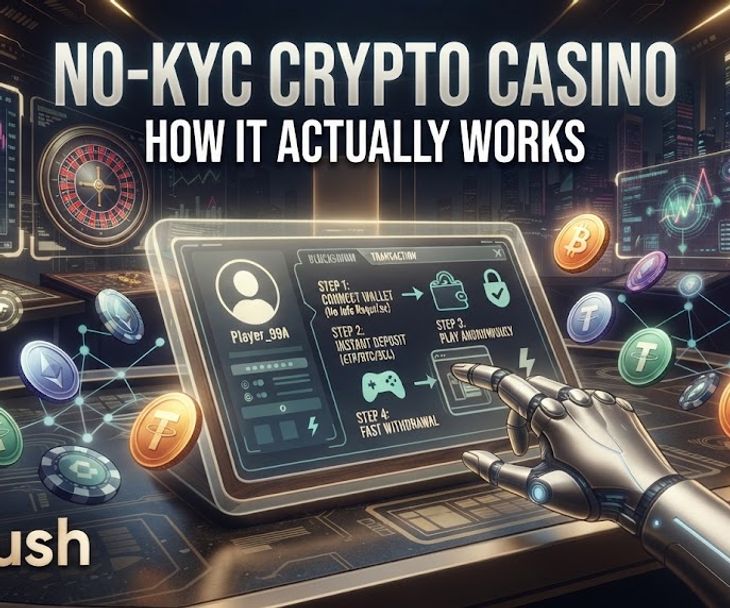
No-KYC Crypto Casino: How It Actually Works
No-KYC means no ID documents to deposit or withdraw crypto, not that gambling is unregulated or untraceable. Here is how the wallet-to-wallet flow works, and where KYC still applies.
5 min read