January 30, 2026 • 5 min read
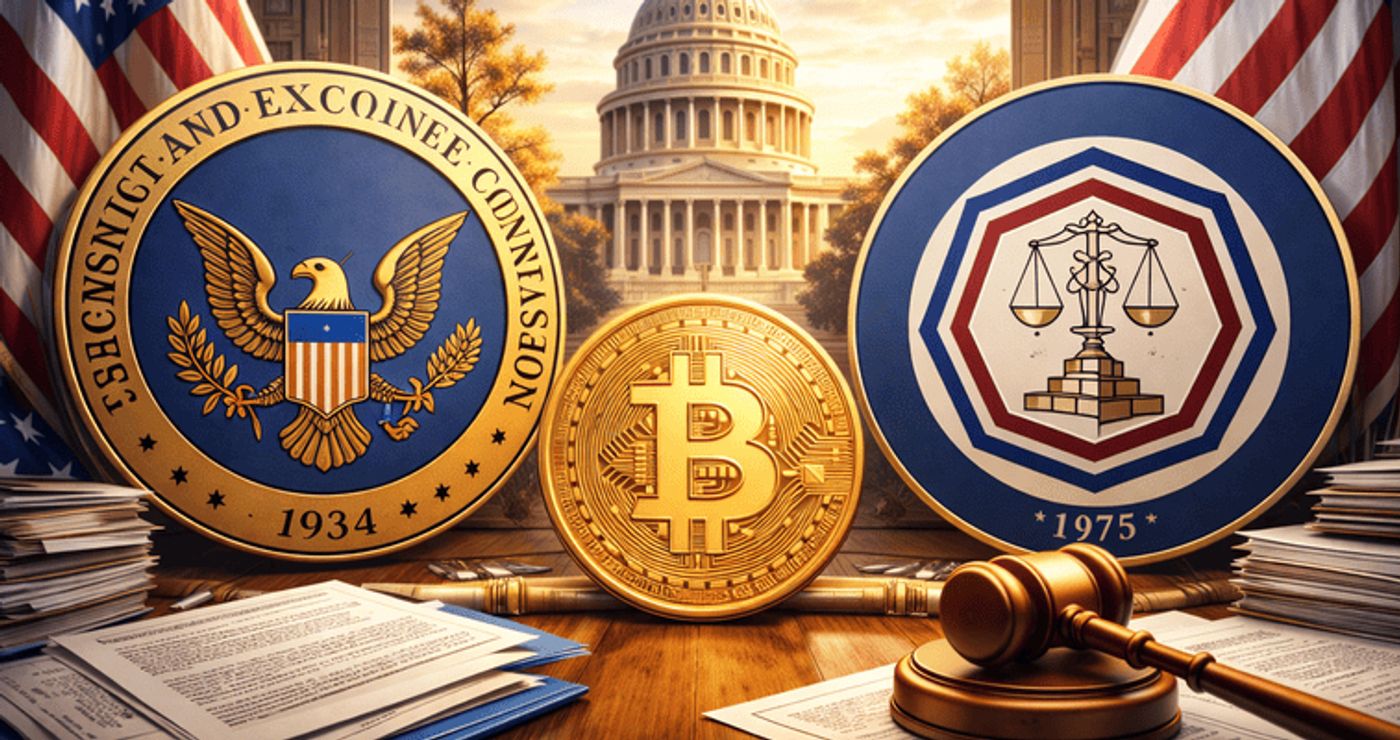
SEC and CFTC Signal Major Shifts in US Crypto Regulation
Quick Answer
US financial regulators are signaling potential changes to how cryptocurrencies are regulated, as both the Securities and Exchange Commission (SEC) and the Commodity Futures Trading Commission (CFTC reassess their roles in overseeing the digital asset market.
Key Facts
| Regulators | SEC and CFTC |
| SEC scope | Assets classified as securities |
| CFTC scope | Commodities and derivatives, including Bitcoin futures |
| Recent approach | Enforcement actions over rulemaking |
| Formal rule changes | None finalized yet |
| Near-term outlook | Continued regulatory signaling |
| Long-term clarity | Depends on Congress |
| Most affected | US exchanges, DeFi, token issuers, derivatives platforms |
The evolving regulatory posture of the SEC and CFTC could reshape enforcement strategies, compliance expectations, and the future structure of the US crypto industry.
As political pressure and industry scrutiny increase, regulatory clarity remains one of the most closely watched issues in crypto.
Regulators Reevaluate Oversight Responsibilities
The SEC and CFTC have long shared overlapping jurisdiction over digital assets, often leading to uncertainty around which agency has authority over specific tokens, platforms, or activities. Recent signals suggest both agencies are reassessing how crypto assets should be classified and regulated.
The SEC continues to focus on assets it considers securities, emphasizing investor protection and disclosure requirements. Meanwhile, the CFTC maintains oversight of commodities and derivatives markets, positioning Bitcoin and certain crypto derivatives under its regulatory scope.
This reassessment reflects growing recognition that existing frameworks may not fully align with how crypto markets operate.
Enforcement-First Approach Under Scrutiny
In recent years, US crypto regulation has been characterized largely by enforcement actions rather than clear rulemaking. Lawsuits, fines, and settlements have played a central role in shaping compliance expectations.
However, critics argue that enforcement-driven regulation creates uncertainty for companies and discourages innovation. Signals from both agencies suggest a potential shift toward more structured guidance, though no formal rule changes have yet been finalized.
The outcome of this reassessment could determine whether the US moves toward clearer crypto-specific regulations or continues relying on legacy financial laws.
Why This Matters for the Crypto Industry
Regulatory signals from the SEC and CFTC directly influence how crypto companies operate, where they choose to locate, and how capital flows into the sector. Unclear rules increase legal risk, raise compliance costs, and slow institutional adoption.
Clearer oversight frameworks could encourage innovation while improving investor confidence. Conversely, prolonged uncertainty may push companies and talent toward jurisdictions with more defined crypto regulations.
For markets, regulatory clarity often plays a role in shaping sentiment and long term investment decisions.
Who Is Most Affected
- US-based crypto exchanges
- DeFi protocols with US exposure
- Token issuers and project foundations
- Derivatives platforms and futures traders
- Institutional investors seeking regulatory certainty
Each of these groups faces different compliance challenges depending on how assets are classified and regulated.
Political and Legislative Headwinds
Any meaningful regulatory shift will likely depend on broader political dynamics. With elections approaching, lawmakers may be hesitant to advance comprehensive crypto legislation.
As a result, agencies may continue to operate within existing legal boundaries while exploring incremental adjustments rather than sweeping reforms. Industry participants are closely watching whether regulatory agencies coordinate more closely or maintain separate enforcement paths.
What Happens Next
In the near term, market participants should expect continued regulatory signaling rather than immediate rule changes. Guidance statements, enforcement priorities, and public commentary may provide clues about future direction.
Over the medium term, proposed rules or legislative drafts could emerge, particularly if political conditions stabilize. Long term clarity may depend on whether Congress establishes a dedicated regulatory framework for digital assets.
Conclusion
Signals from the SEC and CFTC suggest that US crypto regulation may be entering a period of reassessment rather than rapid reform. While clearer rules could strengthen market confidence, uncertainty remains as agencies navigate overlapping authority and political constraints.
For the crypto industry, regulatory direction in the US will continue to be a key factor shaping innovation, investment, and long term growth.
How We Researched This
Methodology
This news analysis summarizes public signals from the U.S. Securities and Exchange Commission and the Commodity Futures Trading Commission about how digital assets may be classified and overseen, set against the agencies' established jurisdiction over securities, commodities and derivatives. It reviews the enforcement-led approach of recent years and the political and legislative factors that could shape future rules. No formal rule changes had been finalized at the time of writing, and regulatory positions may have shifted since. This is informational content, not legal or financial advice.
FAQ
Frequently Asked Questions
What is changing in US crypto regulation
What roles do the SEC and CFTC play in crypto
Why does this matter for crypto companies
Could these changes affect crypto prices
When could new rules be introduced

Share This Post
Share this post for your chance to win!
Related Posts
Level up your knowledge
American Bitcoin (ABTC) Explained: What the Company Is
American Bitcoin (ABTC) is a Nasdaq listed Bitcoin mining and treasury company tied to Hut 8 and the Trump family. Here's what the company actually does, stated as fact, not opinion.
5 min read

Japan Reclassifies Crypto as Financial Asset 2026
Japan's parliament reclassified crypto as a financial asset and cut its top crypto tax rate from 55% to 20%, effective 2028. Here is what it signals globally.
5 min read

Alberta Opens Regulated iGaming 2026: What It Signals
Alberta's regulated iGaming market launched July 13, 2026 with 22 operators live, several running crypto and stablecoin deposit rails on layer two networks.
5 min read