July 15, 2026 • 5 min read

Fear & Greed Index 2026: A Week of Market Fear
Quick Answer
The Crypto Fear & Greed Index has spent over a week between 22 and 28, Fear to Extreme Fear territory, reading around 25 today. It measures mood, not price direction. For crypto casino players, the real implication is bankroll sizing, not market timing.
You must be 18+ to access this content. Please gamble responsibly.
Key Facts
| Fear & Greed Index, July 11 | 26 (Fear) |
| Fear & Greed Index, July 13 | 28 (Fear) |
| Fear & Greed Index, July 14 | 22 (Extreme Fear) |
| Fear & Greed Index, July 15 | 25 (Fear) |
| Fear & Greed Index, July 16 (today) | ~25, Fear to Extreme Fear |
| Extreme Fear threshold | Below 25 on most trackers, below 20 on others |
| Bitcoin price range, past week | ~$62,000-$63,000, holding steady |
| Flush supported cryptocurrencies | 9: BTC, ETH, BNB, LTC, USDT, USDC, TRX, POL, DOGE |
Key Takeaways
- The Crypto Fear & Greed Index has held between roughly 22 and 28 for more than a week, consistently in Fear to Extreme Fear territory.
- Bitcoin has traded near $62,000 to $63,000 for the same stretch, with the broader market under pressure from oil-price-driven inflation concerns.
- The index measures market sentiment, not future price direction, and should not be read as a buy or sell signal.
- Different trackers disagree on both the exact number and where Extreme Fear starts, so the same day can read differently across sources.
- Players who want a fixed bankroll value regardless of market mood can deposit in a stablecoin like USDT or USDC.
The Crypto Fear & Greed Index has spent the entire past week wedged between roughly 22 and 28, consistently in Fear to Extreme Fear territory, and reads around 25 today. Bitcoin has held a tight $62,000 to $63,000 range through the same stretch, and the broader crypto market remains under pressure from oil-price-driven inflation concerns. Extreme Fear readings like this tend to coincide with exactly the kind of week where players make impulsive bankroll decisions, either freezing up entirely or doubling down to chase a rebound. Neither reaction is really about the index itself. Here is what the number actually measures and what it is worth to a crypto casino player.
What Happened
The Crypto Fear & Greed Index, published daily and tracked across sources including CoinMarketCap, Alternative.me, and BitDegree, aggregates volatility, trading volume, social sentiment, and momentum data into a single score from 0 to 100, where 0 signals Extreme Fear and 100 signals Extreme Greed. The index has held a narrow band for over a week straight: 26 on July 11, 28 on July 13, 22 on July 14, 25 on July 15, and around 25 again today, July 16, with no day breaking out of that range. Bitcoin has traded near $62,000 to $63,000 for the whole stretch, and Ethereum has moved in step, both under pressure from a broader risk-off mood across markets. Worth flagging directly: different tracking services disagree on both the exact number and where Extreme Fear actually starts, some set the cutoff at 25, others at 20, so the same day can read as Extreme Fear on one tracker and plain Fear on another, and at least one major tracker showed a Neutral reading in the mid-40s this same week. That spread is itself useful context: the precise number matters less than the persistence of the band, and this market has now gone more than a week without genuinely breaking into Neutral territory.
What This Means for Crypto Casino Players
A Fear & Greed reading is not a price prediction. It is a snapshot of collective mood, built from how people are already trading, not a signal of where prices go next. Treating a 22 reading as confirmation that a rebound or a further drop is imminent is a common mistake, and it is the same mistake in either direction: reading Extreme Fear as "buy the dip" is exactly as speculative as reading it as "sell everything now." The index describes the emotional temperature of the market. It does not describe the market's next move.
Where this genuinely matters for a crypto casino player is bankroll sizing, not market timing. If you hold Bitcoin or Ethereum specifically to fund casino play, a week like this one means your effective bankroll value can shift meaningfully between the moment you check your balance and the moment you actually deposit or withdraw. A $200 BTC balance checked on Monday could be worth noticeably more or less by Thursday purely from price movement, independent of anything that happens at the table. Extreme Fear readings historically travel with wider daily price swings than Extreme Greed or Neutral readings, which means the practical risk during a stretch like this is not just market direction, it is the size of the swings themselves.
The sensible response to that is the same one that applies during any high volatility period, and it has nothing to do with predicting where Bitcoin goes next. Size deposits based on what you are comfortable risking in dollar terms today, not based on a hope that your coin's value holds or improves by the time you play. Players who convert a fixed dollar amount into crypto right before depositing, rather than depositing from a balance they have been holding and hoping appreciates, remove one layer of uncertainty from their session. This is a discipline point, not a market call: it works the same whether the index reads 22 or 82.
There is also a behavioral pattern worth naming directly. Extreme Fear periods correlate with increased impulsive activity across trading and gambling alike, driven by anxiety rather than strategy, whether that shows up as panic selling, chasing a perceived bottom, or increasing bet sizes to "make up" for a bankroll that feels smaller than it did last week. None of those impulses are grounded in anything the Fear & Greed Index actually measures. The index is a mood gauge for traders, not a signal that should influence how much you wager on a casino game.
It helps to know the index's own scale when reading a headline about it. On the most common scale, readings from 0 to 24 are Extreme Fear, 25 to 44 are Fear, 45 to 55 are Neutral, 56 to 75 are Greed, and 76 to 100 are Extreme Greed, though a few trackers set the Extreme Fear cutoff at 20 instead of 25. A week spent bouncing between 22 and 28 stays within a few points of that boundary the entire time, a small shift within a band, not a change of band. Context like this matters because headlines tend to report the number without the scale, and a two or three point daily move can read as more dramatic than it actually is once you know how wide each band is.
Flush Specifics
None of this changes how Flush's cashier operates. Deposits and withdrawals process the same regardless of what the Fear & Greed Index reads on a given day, with withdrawals completing in under two minutes and zero platform fees, confirmed directly at flush.com in July 2026. Flush supports nine cryptocurrencies: BTC, ETH, BNB, LTC, USDT, USDC, TRX, POL, and DOGE.
Players who would rather remove volatility from the equation entirely during a stretch like this have a direct option: deposit and play in USDT or USDC instead of BTC or ETH. Both are stablecoins designed to hold close to a 1:1 dollar peg, so a $100 deposit stays worth $100 regardless of what the broader market does that day, before wins or losses from play itself. Flush does not require identity verification to deposit, play, or withdraw, so switching which coin you use adds no friction. Games from Flush's 30+ licensed providers and Flush Originals, which remain provably fair and verifiable on-chain, are unaffected by market sentiment either way. New players can apply the current welcome bonus on a first deposit in any of the nine supported coins, a decision worth making independent of what the index reads that day.
This index updates daily and can move quickly.
Responsible Gambling
Extreme Fear readings are exactly the moments to be most deliberate about bankroll limits, not less, since anxious markets tend to produce anxious, impulsive decisions at the table too. Set a deposit limit before you play, and resist the urge to increase your wager size to compensate for a bankroll that feels smaller because of market movement outside your control. Flush's responsible gambling tools include deposit limits, session timers, and self-exclusion, all adjustable directly from your account. Free, confidential support is available around the clock from GamCare (gamcare.org.uk) and BeGambleAware (begambleaware.org) in the UK, and the National Council on Problem Gambling (1-800-522-4700, ncpgambling.org) in the US. Never gamble more than you can afford to lose.
How We Researched This
Methodology
Index figures are drawn from CoinMarketCap, Alternative.me, and BitDegree's published Fear and Greed data, cross-referenced with Bitcoin and Ethereum spot price data, accessed July 16, 2026. This index updates daily; treat the readings here as a snapshot as of publish date, not a live tracker, and check a live source such as Alternative.me before acting on anything here.
Timeline
July 11, 2026
Index reads 26, Fear
July 13, 2026
Index reads 28, Fear
July 14, 2026
Index reads 22, Extreme Fear
July 15, 2026
Index reads 25, Fear
July 16, 2026
Index reads around 25, still Fear to Extreme Fear band
FAQ
Frequently Asked Questions
What is the Crypto Fear & Greed Index?
Does Extreme Fear mean Bitcoin's price will drop further?
How does a low Fear & Greed reading affect my crypto casino deposits?
Should I change how much I gamble based on the Fear & Greed Index?
Sources
- Crypto Fear and Greed Index — accessedJuly 16, 2026
- Crypto Fear & Greed Index - Alternative.me — accessedJuly 16, 2026
- Live Crypto Fear and Greed Index — accessedJuly 16, 2026
Disclosure
This article draws on CoinMarketCap, Alternative.me, and BitDegree's published Fear & Greed Index data and Bitcoin/Ethereum spot prices, accessed July 16, 2026. Flush is a licensed crypto casino and sportsbook. This is not financial advice.

Share This Post
Share this post for your chance to win!
Related Posts
Level up your knowledge
American Bitcoin (ABTC) Explained: What the Company Is
American Bitcoin (ABTC) is a Nasdaq listed Bitcoin mining and treasury company tied to Hut 8 and the Trump family. Here's what the company actually does, stated as fact, not opinion.
5 min read
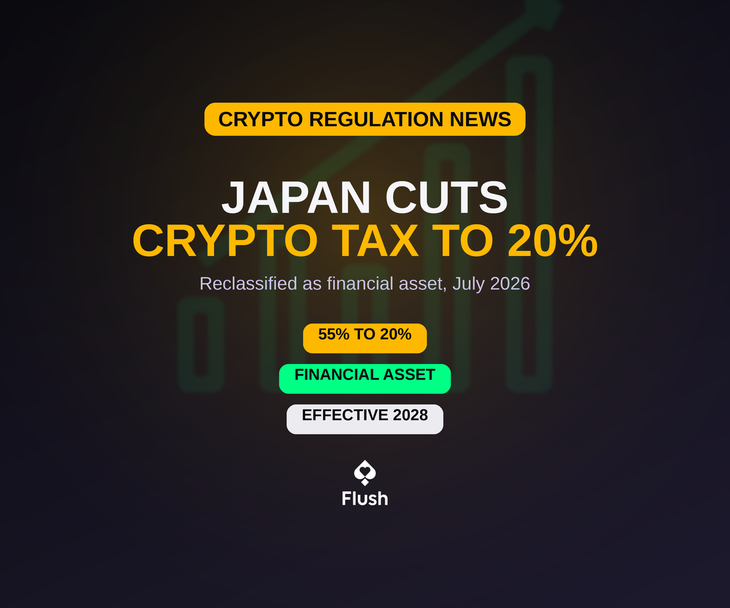
Japan Reclassifies Crypto as Financial Asset 2026
Japan's parliament reclassified crypto as a financial asset and cut its top crypto tax rate from 55% to 20%, effective 2028. Here is what it signals globally.
5 min read

Alberta Opens Regulated iGaming 2026: What It Signals
Alberta's regulated iGaming market launched July 13, 2026 with 22 operators live, several running crypto and stablecoin deposit rails on layer two networks.
5 min read