January 2, 2025 • 5 min read

Wasabi Wallet Guide: From Bitcoin Beginner to Privacy Expert
Quick Answer
Did you know that every Bitcoin transaction you make is visible to anyone with an internet connection? In fact, over 1 trillion dollars worth of Bitcoin transactions are publicly traceable on the blockchain.
Key Facts
| Wallet type | Open-source Bitcoin wallet |
| Platforms | Windows, MacOS, Linux |
| Architecture | 64-bit or arm64 |
| Recovery words | 12 words plus optional passphrase |
| CoinJoin protocol | WabiSabi |
| Minimum for CoinJoin | 0.01 BTC |
| Coordinator fee | 0.3% plus mining fees |
| Network privacy | Tor by default |
| Other privacy features | PayJoin, labels, discreet mode |
Because every Bitcoin transaction is publicly visible, privacy-focused solutions like Wasabi Wallet have become essential tools for Bitcoin users who value their financial privacy. Wasabi Wallet stands out as a powerful, open-source Bitcoin wallet that implements advanced privacy features such as CoinJoin, PayJoin, and Tor integration.
Whether you're new to cryptocurrency privacy or an experienced Bitcoin user, this comprehensive guide will walk you through everything you need to know about using Wasabi Wallet. From basic setup and wallet operations to advanced privacy features, you'll learn how to maintain your financial privacy while using Bitcoin.
Let's dive into how you can start protecting your Bitcoin transactions with Wasabi Wallet.
Getting Started with Wasabi Wallet
Initially, setting up Wasabi Wallet requires a computer with a 64-bit or arm64 architecture running on Windows, MacOS, or Linux. The wallet operates efficiently without demanding extensive computational resources.
System Requirements and Installation
To begin using Wasabi Wallet, download the latest version from the official wasabi wallet site. Subsequently, follow these installation steps based on your operating system:
- For Windows: Install the .msi package
- For MacOS: Mount the .dmg file and drag to Applications
- For Linux: Install using the .deb package or extract the .tar.gz file
Additionally, Wasabi includes built-in Tor integration, eliminating the need for separate installation of the Tor Browser.
Creating Your First Wallet
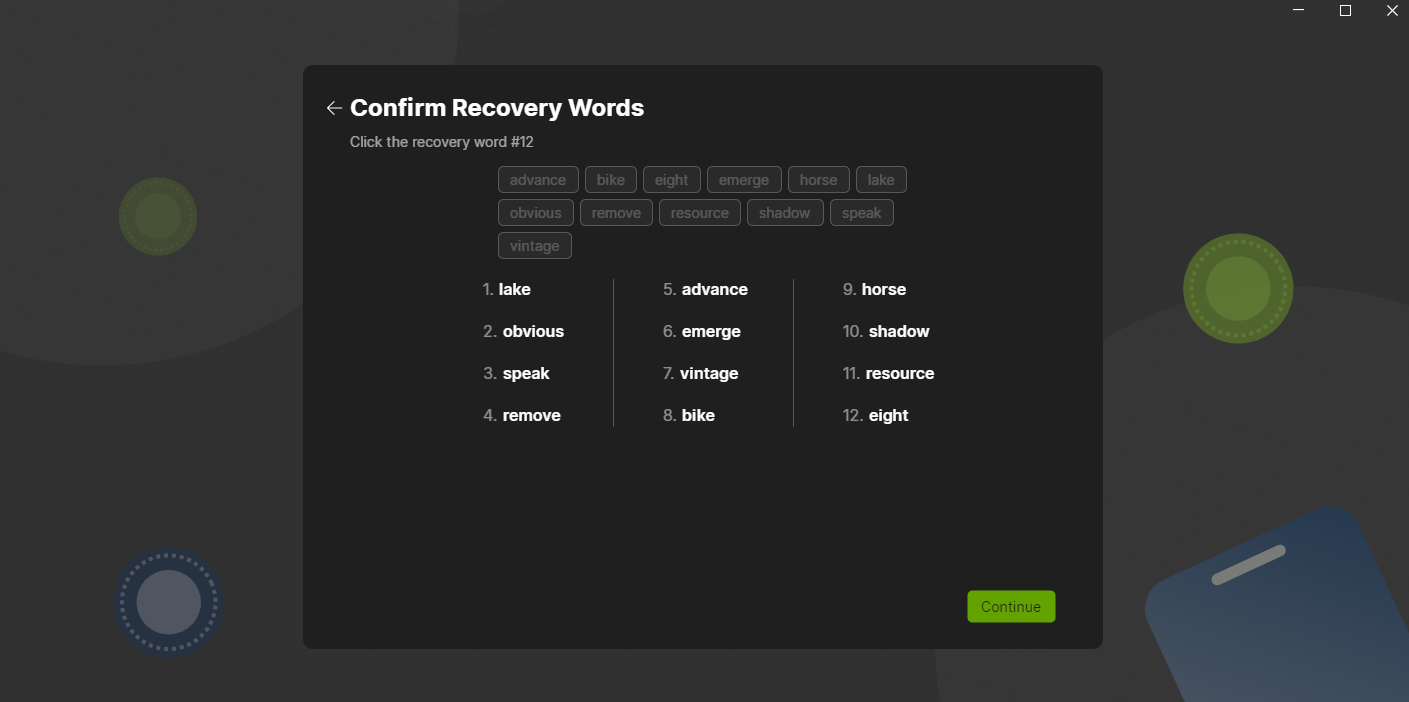
After launching Wasabi, you'll need to create a new wallet. The process involves several critical security steps:
- Choose a distinctive wallet name
- Record your 12 recovery words securely
- Create a strong passphrase
- Select your preferred CoinJoin strategy
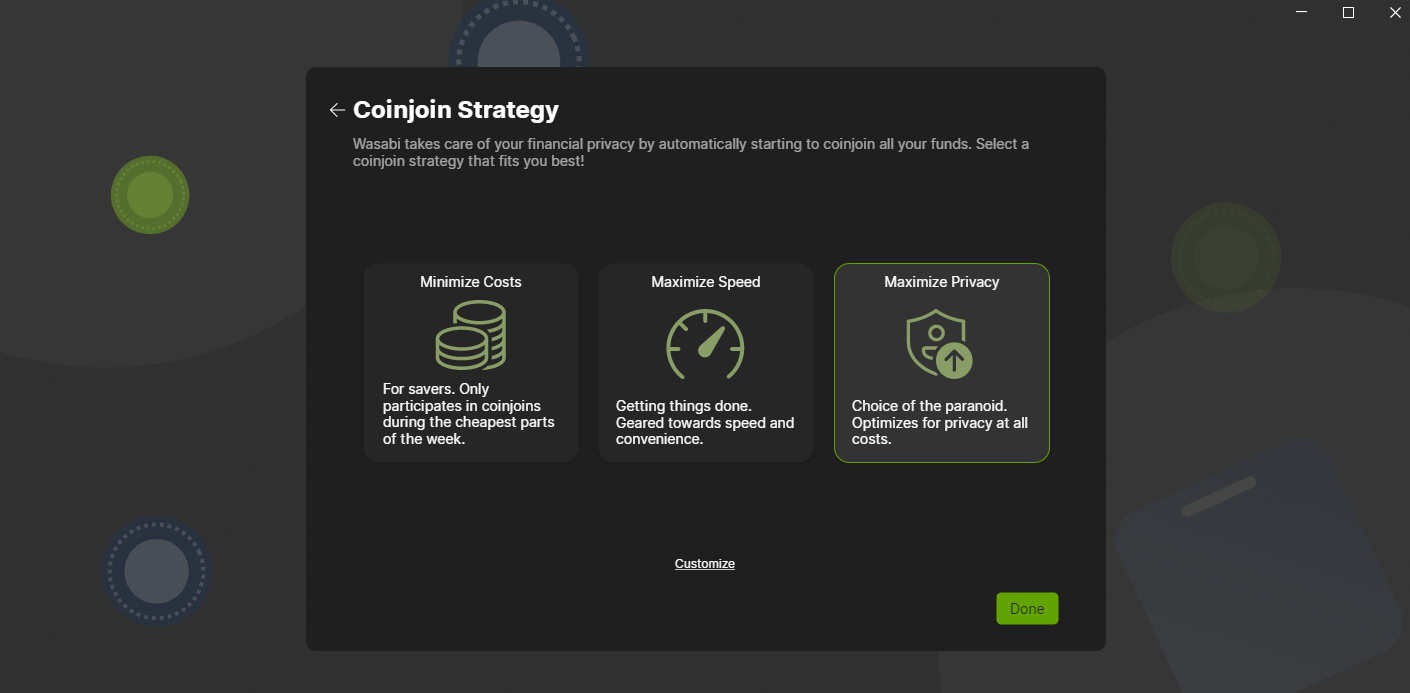
Important: The passphrase serves two crucial functions - it acts as a 13th recovery word and encrypts your private keys. You can either leave it blank or add a custom password of your choosing. Just remember that this password cannot be recovered or changed and typing in a wrong password will not return a login error message like your email but will rather open a new different Bitcoin wallet. Never store your recovery words and passphrase in the same location.
Understanding the Interface
The Wasabi interface prioritizes privacy and security features. Upon successful wallet creation, you'll see your balance displayed at zero. The main interface includes essential functions:
- Receive button for accepting Bitcoin
- CoinJoin controls for privacy enhancement
- Transaction history with privacy indicators
- Privacy progress monitoring
Remember that Wasabi automatically initiates CoinJoin after receiving confirmed funds, provided you have more than 0.01 BTC.
Basic Wallet Operations
Managing your Bitcoin transactions requires careful attention to privacy. Wasabi Wallet provides robust features to help you maintain confidentiality throughout your operations.
Receiving Bitcoin Privately
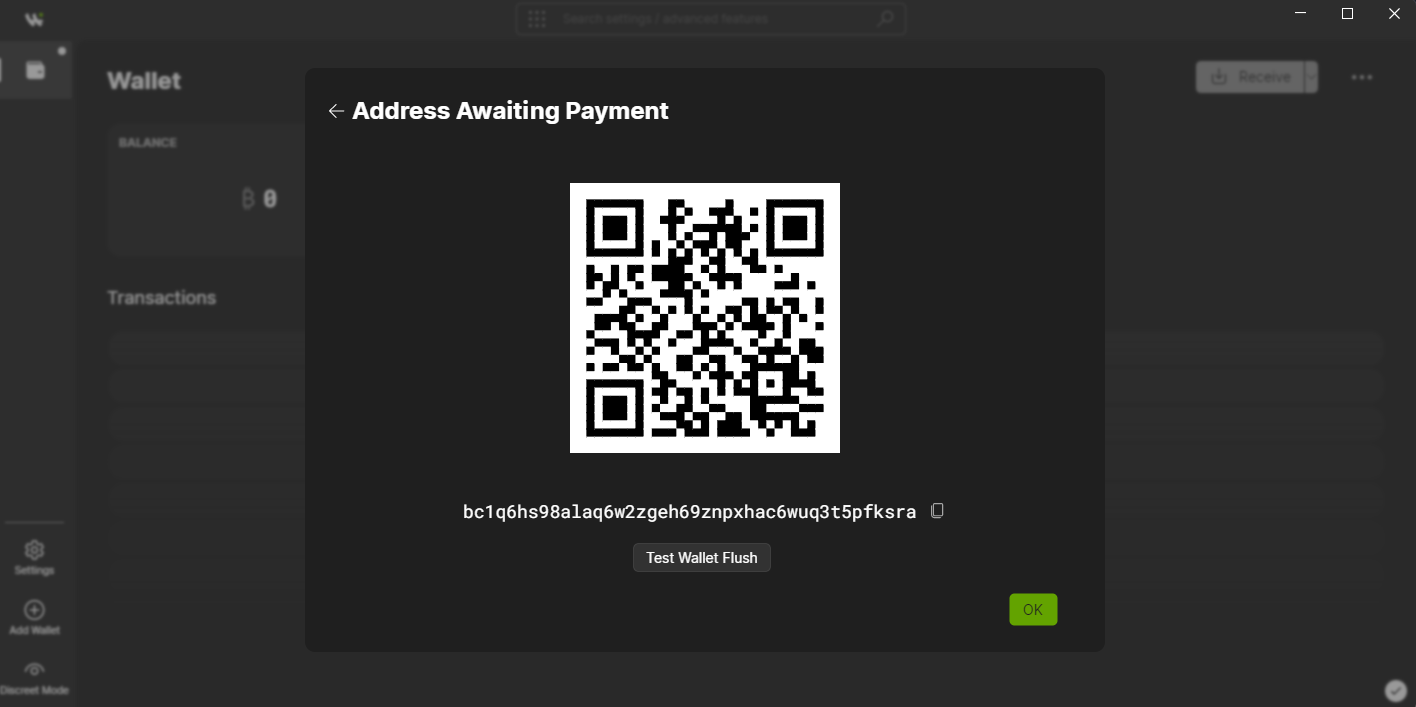
Before receiving funds, you must generate a new address through the 'Receive' button. Importantly, Wasabi requires you to label every receiving address with the names of entities who know this address belongs to you. For example, if receiving Bitcoin from an exchange, label the address with the exchange's name.
Furthermore, once a transaction is received, Wasabi automatically removes the used address from view to prevent address reuse. This feature protects your privacy by eliminating the possibility of linking multiple transactions.
Sending Bitcoin Securely
When sending Bitcoin, Wasabi's interface guides you through several critical steps:
- Click the 'Send' button and enter the destination address
- Specify the amount in BTC or USD
- Label the transaction with observer names
- Review the transaction preview
- Confirm with your passphrase
Consequently, the wallet helps you avoid change outputs that could compromise privacy by offering options to adjust the send amount.
Managing Your UTXOs
Proper UTXO (Unspent Transaction Output) management is essential for maintaining privacy. Consider these key aspects:
- Each UTXO has a unique transaction history that requires careful handling
- Consolidating UTXOs can potentially decrease privacy
- The wallet's auto coin selection algorithm uses your labels to make privacy-conscious decisions
The wallet displays your UTXOs with privacy indicators, helping you make informed decisions about which coins to spend.
Mastering CoinJoin
CoinJoin represents one of the most powerful privacy features in Wasabi wallet, allowing multiple users to combine their transactions into a single Bitcoin transfer that obscures the connection between senders and receivers.
How CoinJoin Works
The WabiSabi protocol in Wasabi wallet enables trustless CoinJoin transactions where nobody can steal your funds or compromise your privacy. Through this process, your Bitcoin becomes part of a larger transaction involving multiple participants, therefore making it significantly harder to trace the origin of funds.
Setting Up Your First CoinJoin
To begin your first CoinJoin in Wasabi wallet:
- Ensure you have at least 0.01 BTC in your wallet
- Wait for incoming funds to be confirmed
- Press the play button in the musicbox at the bottom
- Monitor the spectrum animation indicating active CoinJoin
- Keep Wasabi running until the process completes
Important to realize: For amounts above 0.01 BTC, a coordinator fee of 0.3% applies, plus mining fees.
Here is a step by step video tutorial of all the functions of Wasabi Wallet by one of the best Bitcoin content creators BTC Sessions:
Optimizing CoinJoin Strategy
To maximize your privacy through CoinJoin:
- Avoid consolidating UTXOs after CoinJoining, as this can decrease privacy
- Consider breaking larger amounts into smaller transactions
- Monitor your privacy progress through the Privacy Progress tile
- Allow sufficient time for multiple CoinJoin rounds
Moreover, a recommended practice involves sending your Bitcoin to Wasabi wallet first, completing the CoinJoin process, then transferring funds to cold storage in separate transactions. Otherwise, exchanges might track your entire Bitcoin holdings and their locations.
The shield icon in your transaction history indicates successful participation in CoinJoin rounds. Accordingly, you'll need to keep your wallet connected to the internet until reaching your desired privacy level, which might take several hours depending on the number of participants and rounds.
Advanced Privacy Features
First and foremost, Wasabi Wallet offers advanced privacy features that enhance your Bitcoin transaction security beyond basic operations. Let's explore these sophisticated tools that make your transactions more private.
PayJoin Integration
PayJoin enables collaborative transactions between you and the receiver, effectively breaking common blockchain analysis patterns. Above all, this feature reduces transaction fees through coin consolidation. To use PayJoin:
- Ensure the receiver supports PayJoin protocol
- Look for the BIP21 Bitcoin URI in payment invoices
- Connect through Tor onion service
- Complete the transaction within the timeout period
Tor Network Configuration
Generally speaking, Wasabi routes all traffic through Tor by default. The wallet checks for existing Tor installation and uses it automatically. Nevertheless, you can customize your Tor configuration:
- Specify custom SOCKS5 ports for enhanced security
- Configure control ports for advanced routing
- Set up dedicated Tor folders for better organization
Label Management Best Practices
Proper label management stands as a cornerstone of Bitcoin privacy. Consider these essential practices:
- Create descriptive labels for each transaction source
- Avoid using personal information in labels
- Regularly review and update your labeling system
- Maintain consistent naming conventions across transactions
Important Note: Your labels are automatically saved in encrypted backup files. During wallet restoration, use the encrypted backup method rather than seed words to preserve your labels.
The wallet's discreet mode masks sensitive information from physical observers, enabling you to share screenshots without compromising privacy. This feature maintains full functionality, including sending, receiving, and CoinJoin operations.
Conclusion
Wasabi Wallet is a powerful tool for Bitcoin users who prioritize financial privacy. With robust features like CoinJoin, PayJoin, and Tor integration, it provides essential protection against blockchain surveillance. However, achieving optimal privacy requires more than just using these tools, it starts with properly setting up your wallet and understanding basic operations. Take the time to label your transactions, manage UTXOs carefully, and use CoinJoin strategically to maximize privacy.
Your journey towards Bitcoin privacy begins with simple steps. Start by downloading Wasabi Wallet, securing your recovery words, and exploring its privacy-focused interface. Each privacy feature serves a unique purpose: PayJoin disrupts blockchain analysis patterns, while Tor ensures anonymous network connections. Consistent attention to detail is crucial in maintaining privacy.
For enhanced privacy, don't rely on just one wallet provider. Consider alternatives like Cake Wallet, which supports not only Bitcoin but also privacy coins such as Monero and Zcash, alongside advanced Bitcoin features like Silent Payments and Tor routing. Another option is Aqua Wallet, a self-custodial wallet that handles Bitcoin Onchain, Liquid Bitcoin, and Bitcoin Lightning, without the need to run your own Lightning node or open channels. Start implementing these practices today to significantly improve your financial privacy when using Bitcoin.
Brought to You by Flush, the Ultimate Bitcoin Casino Destination for Gaming Enthusiasts
Flush is a crypto-first online casino with fast deposits, fast withdrawals, and a slot library deep enough to keep regulars busy. BTC, ETH, USDT, USDC, and several more chains supported. Welcome bonus: up to 150%.
First-deposit players at Flush get a welcome bonus of up to 150% to extend their first session, plus automatic entry into the Weekly Races prize pool when they spin slots.
If you want to play crypto slots with real money, Flush is built for it. Our lobby spans 6,000+ games from 70+ providers, the welcome offer is a welcome bonus of up to 150%, and USDT TRC-20 withdrawals typically clear in under 2 minutes for standard play.
For a related read, check out our breakdown of Unlock Bitcoin with Xverse Wallet: Ordinals, Runes, sBTC & DeFi.
How We Researched This
Methodology
This guide describes Wasabi Wallet as presented on its official website and in the wallet itself: system requirements, installation packages per operating system, the wallet creation flow, and how CoinJoin (WabiSabi), PayJoin, Tor routing, labels and discreet mode work. The coordinator fee and minimum CoinJoin amount are those shown in the wallet's CoinJoin flow, and a BTC Sessions video tutorial is embedded for a visual walkthrough. Fees, defaults and features can change between Wasabi releases, so check the official site before relying on them. This is general information, not financial or legal advice.
FAQ
Frequently Asked Questions
What is Wasabi Wallet?
What do I need to run Wasabi Wallet?
What happens if I enter the wrong passphrase?
How much Bitcoin do I need for CoinJoin?
What does CoinJoin cost in Wasabi?
Why does Wasabi ask me to label addresses?
How do I keep my labels when restoring a wallet?

Share This Post
Share this post for your chance to win!
Related Posts
Level up your knowledge

Bitcoin Futures Explained
Bitcoin futures let traders speculate on price without owning the coin, using leverage that cuts both ways. Here is how regulated futures, perpetuals, margin, and liquidation actually work, and why futures are not a substitute for owning bitcoin outright.
5 min read

BlackRock Bitcoin Price Prediction: Fact-Check
Viral headlines claim BlackRock predicted a specific Bitcoin price, but the reality blends several distinct statements from different executives. Here is what Larry Fink and Rick Rieder have actually, verifiably said, sourced and separated from unverified claims.
5 min read

Bitcoin Hyper: Legit or Hype?
Bitcoin Hyper markets itself as a Bitcoin Layer 2 on a Solana-compatible chain, but it has no live mainnet, an anonymous team, and price speculation running well ahead of any working product. Here is a fact-checked, non-cynical look at where it actually stands.
5 min read