August 11, 2026 • 5 min read

Why Is Crypto Down Today? (Living Guide)
Quick Answer
Crypto usually falls from a mix of causes at once: leveraged liquidation cascades, macro risk-off news, exchange or stablecoin trouble, and regulatory headlines, rarely just one. The mechanics behind each driver explain most single-day crashes.
You must be 18+ to access this content. Please gamble responsibly.
Key Facts
| Main drop triggers | Leveraged liquidations, macro risk-off news, exchange/stablecoin events, regulatory headlines |
| Trading hours | Crypto trades 24/7 with no circuit breakers, unlike equities |
| Liquidation cascade | Forced selling from leveraged positions can turn a small dip into a double-digit drop within minutes |
| Crypto vs stocks | Bitcoin often trades as a high-beta risk asset, amplifying broad risk-off moves |
| Recovery pattern | Drops tend to happen faster than recoveries, since forced selling is instant and buying conviction rebuilds gradually |
| Useful signal | Funding rates and open interest data can show a leverage flush in progress before headlines catch up |
| Contagion risk | Exchange or stablecoin failures can pressure liquidity across the whole market, not just the affected platform |
| Practical takeaway | Only deposit what you are comfortable seeing move in either direction |
Crypto drops for the same handful of reasons almost every time: too much leverage getting forced out of the market at once, a macro headline that changes how traders price risk, trouble at an exchange or stablecoin, or a regulatory announcement that spooks short-term holders. Usually it is two or three of those hitting together rather than one clean cause, which is why a single news headline rarely explains the whole move on its own.
The Short Answer: There's Rarely One Reason
Whenever the market has a red day, it is tempting to look for the one headline that "caused" it. Reporters do this constantly, pinning a five percent drop on a single tweet or a single data print. In reality, crypto's price action is almost always the result of several forces layering on top of each other. A weak macro backdrop makes the market more fragile, then a leverage flush amplifies the move, then the amplified move triggers more automated selling. By the time the candle closes, the "cause" that gets reported is usually just the spark, not the fuel.

Leverage Unwinds and Liquidation Cascades
A large share of crypto trading volume happens on margin, through perpetual futures and other leveraged products where traders put down a fraction of a position's value and borrow the rest. That works fine when prices are calm, but it turns fragile fast when they are not. If the price moves against a leveraged position far enough, the exchange automatically closes it, a forced sell order that has nothing to do with what that trader thinks the asset is worth. One forced sale pushes price down slightly, which can trigger the next trader's liquidation level, which pushes price down again. This chain reaction, often called a liquidation cascade, can turn a two percent dip into a ten percent flush within minutes, especially in thinner overnight liquidity. It is mechanical, not sentiment-driven, which is exactly why these drops can look so much sharper than anything happening in the news that day.
Macro News Moves Crypto Faster Than Stocks
Crypto trades twenty four hours a day, seven days a week, with no circuit breakers and comparatively thin order books next to major equity indices. That combination means macro news, a hotter than expected inflation print, a surprise interest rate comment from a central bank official, a weak jobs report, gets priced into crypto almost instantly and often more violently than into stocks, which have overnight gaps and trading halts to absorb shocks. Bitcoin in particular has increasingly traded like a high-beta risk asset alongside tech stocks, meaning it tends to fall harder than the broader market on days when investors are pulling back from risk in general, and rally harder on days when risk appetite comes back. When people ask why crypto is down on a day with no crypto-specific news at all, the honest answer is often simply that risk assets broadly sold off and crypto, being more volatile and more liquid to trade around the clock, absorbed more of that move than equities did.
Exchange Events and Contagion
Some of the sharpest single-day drops in crypto history trace back not to macro conditions but to problems at a specific exchange or stablecoin issuer. When a major platform freezes withdrawals, discloses a hack, or turns out to be insolvent, the fear spreads well beyond that platform's own users. Traders elsewhere start pulling funds off other exchanges as a precaution, which pressures liquidity everywhere, and confidence in the broader market takes a hit even for holders who were never near the affected platform. This kind of contagion is one of the clearest arguments for self-custody and for using platforms that settle quickly rather than sitting on large uncleared balances. It is also part of why a crypto deposit at a platform that clears in minutes rather than days matters more than it might seem on a normal trading day, since your funds are not sitting exposed on a rail longer than necessary.
Regulatory Headlines
Regulatory news is the third recurring driver, and it cuts both ways. A country announcing a ban, an agency filing an enforcement action against a major exchange, or a proposed law that would restrict how crypto can be custodied or taxed can all trigger fast, sharp sell-offs, particularly from short-term holders who would rather exit than wait and see how a rule actually gets implemented. On the flip side, positive regulatory clarity, like an ETF approval or a country formally legalizing a use case, has historically done the opposite and pulled fresh capital in. Because regulatory news is genuinely unpredictable and varies enormously by jurisdiction, it tends to produce some of the most volatile single days on the calendar, since traders are pricing an outcome nobody can fully game out in advance.
Why Crypto Drops Harder Than It Rises
There is a structural reason crypto often feels like it falls faster than it climbs. Fear is a stronger short-term motivator than greed, and forced selling from liquidations happens on a compressed timeline while buying tends to happen gradually as conviction rebuilds. A leveraged long position gets liquidated in seconds; a new buyer deciding to average back in over the following weeks does not create anywhere near the same instant pressure in the other direction. Add in crypto's thinner liquidity compared to major currency or equity markets, and the same dollar amount of selling moves the price more than the same dollar amount of buying, at least in the short term. None of this means drops are permanent, historically the market has recovered from steep pullbacks more than once, but it does explain why the down days often feel more dramatic than the recovery that follows.
How to Read a Crash Without Panicking
The most useful habit during a red day is separating mechanical selling from a genuine change in fundamentals. Ask what actually happened: was there a specific piece of news, or is this a broad risk-off day hitting every asset class at once? Check whether the move lines up with a known liquidation event, funding rates and open interest data are publicly available on most exchanges and often show a leverage flush in progress well before the headlines catch up. And resist the urge to treat every red candle as new information about the long-term case for an asset. If you want a deeper look at how a genuine multi-week or multi-month downturn typically plays out, our guide on what happens when Bitcoin crashes walks through the mechanics stage by stage, and our broader look at whether crypto is actually dead after past crashes covers how the market has historically recovered from drawdowns that felt existential at the time.
What This Means If You Hold or Play With Crypto
If you are holding crypto or funding an account with it, volatility like this is simply part of the asset class, not a sign that something has broken. It is worth checking market sentiment data occasionally rather than reacting to headlines alone, our breakdown of the Fear and Greed Index explains how that gauge is built and what extreme fear readings have historically meant for what comes next. For anyone funding a crypto account specifically to play, the safest approach is the same one that applies to any volatile asset: only deposit what you are genuinely comfortable seeing move in either direction, and treat the deposit itself as separate from your investment thesis on the coin.
Responsible Gambling
Set a budget before you start and treat it as entertainment spending, not a way to recover losses. Flush's responsible gambling tools include deposit limits, session timers, and self-exclusion, all adjustable directly from your account. Free, confidential support is available around the clock from GamCare (0808 8020 133) and BeGambleAware in the UK, and the National Council on Problem Gambling (1-800-GAMBLER) in the US, or via Gambling Therapy globally.
Crypto's red days are rarely mysterious once you know what to look for, leverage, macro news, exchange trouble, or regulation, usually some combination of the four. Whichever coin you are holding, deposits and withdrawals at Flush's casino clear in minutes rather than days, so your funds are never sitting exposed on a slow rail while the market moves.
How We Researched This
Methodology
This living guide was researched via web search in August 2026 covering the recurring structural drivers of crypto price drops: leverage and liquidation mechanics, macro correlation with risk assets, exchange and stablecoin contagion events, and regulatory headline risk. It is written to explain general mechanics rather than pin any single date's price move to one cause, and is intended to be refreshed periodically rather than tied to one news cycle.
FAQ
Frequently Asked Questions
Why is crypto down today?
Why does crypto crash harder than stocks?
What is a liquidation cascade?
Does bad news always cause a crypto drop?
Will crypto recover after a drop?

Share This Post
Share this post for your chance to win!
Related Posts
Level up your knowledge

Bitcoin Crash: What Happens When BTC Dumps
What actually causes a bitcoin crash, how leveraged liquidations amplify the fall, and what history says about recovery, from the 2018 crash through the October 2025 to 2026 correction.
5 min read
Is Crypto Dead? Reality Check
Crypto's obituary gets written every cycle. Here is what the 2026 data on market cap, institutional adoption, and stablecoin growth actually says about whether it is dead or just going through another drawdown.
5 min read
What Is the Highest Bitcoin Has Ever Been? ATH History
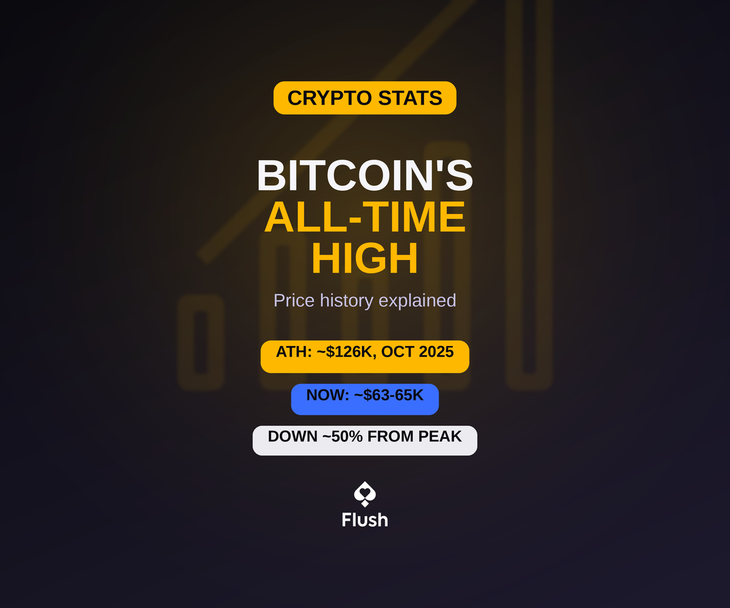
Bitcoin's all time high sits around $126,000, set in early October 2025. Here's the full timeline of its major peaks, and where the price stands now.
5 min read